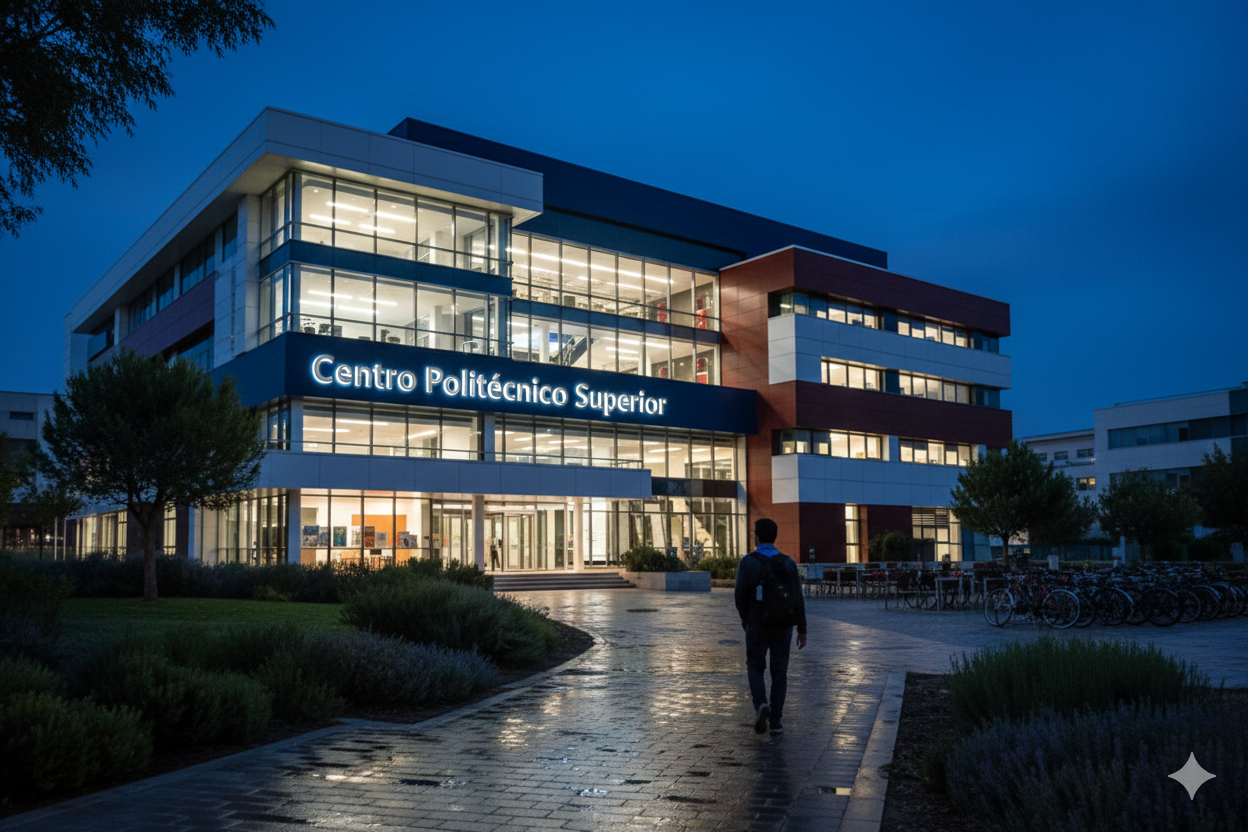
The Legacy and Future of the Centro Politécnico Superior A Hub of Engineering Excellence
In the landscape of European technical education, few institutions have played as pivotal a role in regional development as the Centro Politécnico Superior (CPS). Located in the vibrant city of Zaragoza, Spain, this institution now known as the School of Engineering and Architecture (EINA) has been the crucible for generations of engineers who have driven the industrial engine of Aragon and beyond. For decades, the name “Centro Politécnico Superior” has been synonymous with rigor, innovation, and technical mastery.
Why does this institution matter today? As the world pivots toward renewable energy, artificial intelligence, and smart infrastructure, the foundations laid by the CPS are more relevant than ever. This center transformed a traditional university into a modern technological powerhouse, bridging the gap between academic theory and heavy industry. Whether you are a prospective student, a researcher looking for collaboration, or an industry professional seeking top talent, understanding the ecosystem of the Centro Politécnico Superior offers a window into the future of Spanish engineering.
This article delves deep into the history, academic structure, research impact, and student life of the Centro Politécnico Superior. We will explore how it evolved into its current form, the EINA, while maintaining the spirit of excellence that defined the CPS era.
The Origins of the Centro Politécnico Superior
The story of the Centro Politécnico Superior is one of rapid adaptation and growth. It began in the 1970s, a time when Spain was undergoing significant industrialization. The University of Zaragoza recognized the urgent need for high-level technical training that went beyond traditional vocational schools.
Originally established as the Escuela Técnica Superior de Ingenieros Industriales de Zaragoza (ETSIIZ) in 1974, the institution underwent a major transformation in 1989, rebranding as the Centro Politécnico Superior. This name change reflected a broader mission: to encompass not just industrial engineering, but also the burgeoning fields of computer science and telecommunications. This foresight positioned the CPS as a leader in the digital revolution long before it became a global standard.
A Strategic Location: The Río Ebro Campus
One cannot discuss the Centro Politécnico Superior without mentioning its physical home: the Río Ebro Campus (Campus Río Ebro). Situated in the Actur district of Zaragoza, this campus was purpose-built to foster technological innovation.
Unlike the university’s central campus, which focuses on humanities and sciences, the Río Ebro Campus is a dedicated “tech city.” It houses the CPS buildings, research institutes, and business incubators. This proximity creates a unique ecosystem where students can walk from a lecture hall to a cutting-edge research lab or a startup office in minutes. The urban design of the campus reflects the practical, interconnected nature of the engineering disciplines taught within the Centro Politécnico Superior.
Academic Offerings: Engineering Disciplines
The academic core of the Centro Politécnico Superior was built on diversity. While many schools focused on a single niche, the CPS adopted a polytechnic approach, offering a wide array of degrees under one roof.
Historically, the CPS offered degrees in Industrial Engineering, Telecommunications Engineering, and Computer Engineering. These programs were notorious for their difficulty and high standards. Today, under the EINA umbrella, this legacy continues with expanded specialized degrees. Students can specialize in robotics, chemical processes, or software development, all while benefiting from the rigorous mathematical and physical foundation that was the hallmark of the original Centro Politécnico Superior curriculum.
The Transition to EINA: A Modern Merger
In 2011, a significant administrative shift occurred. The Centro Politécnico Superior merged with the Escuela Universitaria de Ingeniería Técnica Industrial (EUITI) to form the Escuela de Ingeniería y Arquitectura (EINA).
Why did this happen? The Bologna Process, which aimed to standardize European higher education, required a restructuring of degrees. By merging the two centers, the University of Zaragoza created a unified, stronger entity. However, the legacy of the CPS remains vital. Many faculty members, research groups, and facilities still operate under the ethos established during the CPS era, and “Centro Politécnico Superior” remains a common colloquial term among locals and alumni when referring to the upper engineering school buildings.
Research Powerhouse: The I3A Institute
Research was the engine of the Centro Politécnico Superior, and it remains the crown jewel of the campus. The Aragon Institute of Engineering Research (I3A) is closely linked to the school, serving as the primary research vehicle for faculty and PhD students.
The I3A covers areas ranging from biomedical engineering to combustion technologies. During the CPS years, this institute began attracting massive European funding, putting Zaragoza on the map for R&D. Today, the research output that originated in the Centro Politécnico Superior contributes to patents and technologies used globally, particularly in the automotive and household appliance sectors.
Industry Partnerships and Employability
One of the defining features of the Centro Politécnico Superior was its refusal to be an “ivory tower.” From its inception, the CPS cultivated deep ties with the industrial sector of Aragon.
Major corporations like Opel (now Stellantis), BSH (Bosch/Siemens), and CAF (train manufacturing) have long-standing agreements with the school. These partnerships often take the form of “Cátedras” (sponsored chairs), where companies fund research and offer internships. For students, this means the education provided by the Centro Politécnico Superior is directly aligned with market needs, resulting in exceptionally high employability rates for graduates.
International Mobility and Erasmus
Engineering is a global language, and the Centro Politécnico Superior understood this early on. The school established one of the most robust international mobility networks in the Spanish university system.
Through the Erasmus program and bilateral agreements with universities in the USA, Australia, and Asia, the CPS encouraged students to spend a year abroad. This wasn’t just about learning a language; it was about exposing future engineers to different technological cultures. This tradition continues today, with hundreds of students from the campus traveling abroad every year, spreading the reputation of the Centro Politécnico Superior worldwide.
Student Life and Associations
Life at the Centro Politécnico Superior was never just about studying. The school is known for a vibrant, somewhat rebellious student culture driven by the Delegación de Alumnos (Student Delegation).
Student associations range from the serious to the recreational. There are groups dedicated to building Formula Student racing cars, organizing hackathons, and even theater groups. The “San Pepe” festival, celebrated by engineering students, is legendary in Zaragoza. This camaraderie fosters a network of professional contacts that lasts decades, proving that the social aspect of the Centro Politécnico Superior is as valuable as the academic one.
Notable Alumni and Success Stories
The impact of an educational institution is best measured by its graduates. Alumni of the Centro Politécnico Superior can be found in top positions across the globe.
From CEOs of major Spanish multinational corporations to lead researchers at NASA and CERN, the “CPS seal of approval” carries weight. Many graduates have also become entrepreneurs, founding successful tech startups in the local incubators. These success stories serve as inspiration for current students, reinforcing the idea that the Centro Politécnico Superior is a launchpad for elite careers.
Admission Requirements and Selectivity
Gaining admission to the degrees offered by the Centro Politécnico Superior (now EINA) has historically been competitive. The “Nota de Corte” (cut-off grade) for degrees like Mathematics + Computer Engineering or Industrial Technologies is among the highest in the region.
Prospective students must demonstrate strong proficiency in mathematics and physics during the Spanish university entrance exams (EvAU). The rigorous entry requirements ensure that the student body is highly capable, allowing professors to maintain a fast-paced and demanding curriculum that defined the academic rigor of the Centro Politécnico Superior.
Facilities: The Hypatia Library and Labs
To support high-level engineering, you need high-level infrastructure. The Río Ebro Campus boasts the Hypatia de Alejandría Library, a modern facility that serves as the intellectual hub for students of the Centro Politécnico Superior.
Beyond books, the campus is filled with specialized laboratories. There are wind tunnels for aerodynamics, high-voltage labs for electrical engineering, and clean rooms for nanotechnology. These facilities allow students to engage in hands-on learning, bridging the gap between theoretical calculations and real-world application a core tenet of the Centro Politécnico Superior philosophy.
The Role of Architecture in the Merger
When the CPS became EINA, “Architecture” was the new addition to the name. The introduction of Architecture studies brought a creative, design-oriented dimension to the campus.
This integration was strategic. Modern engineering often requires a blend of structural integrity and aesthetic design. By housing architecture students alongside industrial engineers, the post-merger Centro Politécnico Superior environment encourages cross-disciplinary collaboration. Civil engineers and architects now share spaces, mimicking the collaborative reality of the construction and urban planning industries.
Comparison: CPS vs. EINA
For many, the distinction between the old name and the new one can be confusing. It is helpful to visualize the evolution to understand that the Centro Politécnico Superior didn’t disappear; it evolved.
The table below highlights the key differences and continuities:
| Feature | Centro Politécnico Superior (Pre-2011) | EINA (Post-2011) |
| Focus | Industrial, Telecom, Computer Engineering | Added Architecture & Industrial Design |
| Structure | Standalone Upper Technical School | Merged School (CPS + EUITI) |
| Degrees | “Ingeniero Superior” (5-6 years) | Bologna Bachelor’s + Master’s |
| Location | Río Ebro Campus (Ada Byron, Torres Quevedo) | Río Ebro Campus (Same buildings) |
| Research | I3A (Emerging) | I3A (Fully Mature & Integrated) |
Economic Impact on Aragon
The Centro Politécnico Superior has been a key driver of the Aragonese economy. Zaragoza is a logistics and industrial hub in Europe, and the CPS has provided the human capital to sustain this status.
The availability of highly skilled engineers attracts foreign investment. Companies set up factories and development centers in Zaragoza because they know they can recruit talent from the Centro Politécnico Superior. This symbiotic relationship between the school and the regional economy protects the area from “brain drain” and stimulates local innovationThe Future of Engineering in Zaragoza
Looking ahead, the legacy of the Centro Politécnico Superior is evolving to meet new challenges. The focus is shifting toward sustainability, Industry 4.0, and bioengineering.
The school is currently updating its curriculum to include more data science and green energy technologies. As the boundaries of engineering expand, the institution continues to adapt. The spirit of the Centro Politécnico Superior innovative, demanding, and practical ensures that Zaragoza will remain a beacon of technical education for decades to come.
FAQs
What is the difference between Centro Politécnico Superior and EINA?
The Centro Politécnico Superior (CPS) was the former name of the higher engineering school at the University of Zaragoza. In 2011, it merged with the School of Industrial Technical Engineering (EUITI) to create the School of Engineering and Architecture (EINA). While the official name is now EINA, many still refer to the campus and its higher-degree heritage as CPS.
Where is the Centro Politécnico Superior located?
It is located on the Río Ebro Campus (Campus Río Ebro) in the Actur neighborhood of Zaragoza, Spain. The campus is accessible by tram (Line 1) and bus, connecting it easily to the city center.
What degrees can I study at the former Centro Politécnico Superior?
Under the current EINA structure, you can study Bachelor’s and Master’s degrees in Industrial Technologies, Telecommunications, Computer Engineering, Chemical Engineering, Mechanical Engineering, Electrical Engineering, Industrial Design, and Architecture.
Is the Centro Politécnico Superior a public or private institution?
It is a public institution. It is part of the University of Zaragoza, which is a state-funded university. This ensures relatively low tuition fees compared to private engineering schools in Europe.
Does the school offer degrees in English?
Yes, the institution has made significant strides in internationalization. Many Master’s programs and specific undergraduate courses are offered in English to accommodate international students and prepare graduates for the global market.
What research opportunities exist at the Centro Politécnico Superior?
The campus hosts the I3A (Aragon Institute of Engineering Research), one of Spain’s leading technology institutes. Students often have the opportunity to participate in cutting-edge research projects, particularly during their Master’s thesis or PhD studies.
How hard is it to get into the Centro Politécnico Superior?
Admission is competitive. The cut-off marks (Notas de Corte) vary by year and degree, but engineering programs especially double degrees involving Mathematics or Computer Engineering typically require high scores in the Spanish University Entrance Exam (EvAU).
Conclusion
The Centro Politécnico Superior is more than just a set of buildings in Northern Zaragoza; it is a testament to the power of technical education to transform a region. From its early days as the ETSIIZ to its current incarnation as the EINA, it has remained steadfast in its mission to produce engineers of the highest caliber.
For students, it offers a challenging but rewarding path to a successful career. For the industry, it represents a reliable source of innovation and talent. As we move further into the 21st century, the foundational values of the Centro Politécnico Superior excellence, adaptability, and hard work will continue to shape the technologies that define our lives. Whether you are walking through the Torres Quevedo building or studying in the Hypatia library, you are standing on ground that has engineered the future of Spain.